Showing posts with label Spain. Show all posts

Tuesday, 18 July 2023

Environmental learning and comunity service symposium

On July 2022 Manyanet Sant Andreu  was selected to join a symposium about environmental learning and comunity service activities organized by XESC (Xarxa d'escoles per la sostenibilitat de Catalunya-Network of Schools for the Sustainability of Catalonia). 

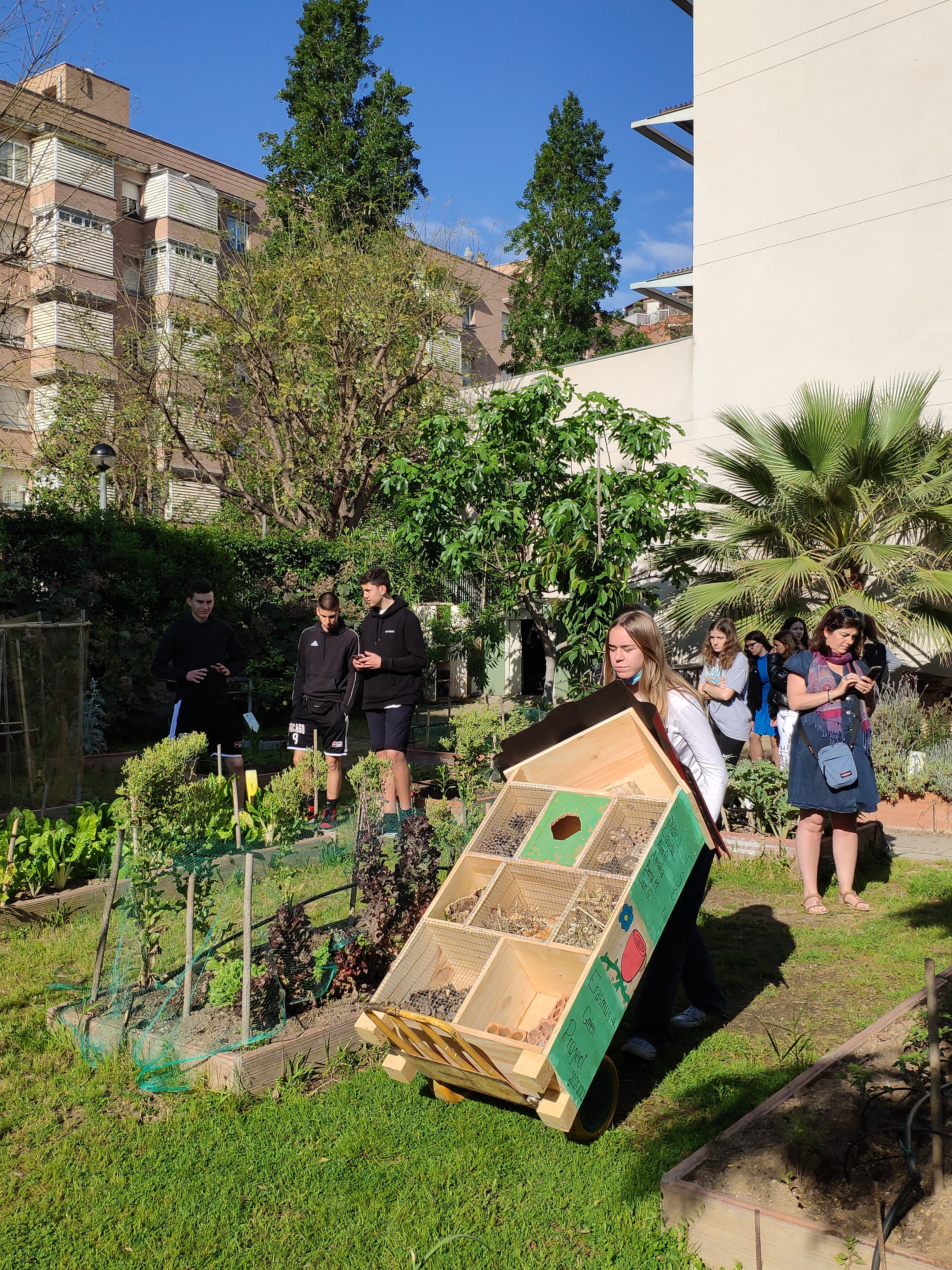
Conxita Payán, one of the Spanish teachers involved in the Erasmus exchange program  showed to other teachers from all Catalonia a presentation about our project making insect hotels as part of our Erasmus+ project.

Symposium link: http://escolesxesc.cat/ii-simposi-espai-agora/


Parks of Barcelona-an activity for the Thessaloniki meeting

Our students also prepared a video about one of these parks, Parc del laberint d'Horta, here you have...


Tuesday, 4 July 2023

Memories of beautiful times...BARCELONA!!

Nights out in Barcelona!

Making friends on the train!

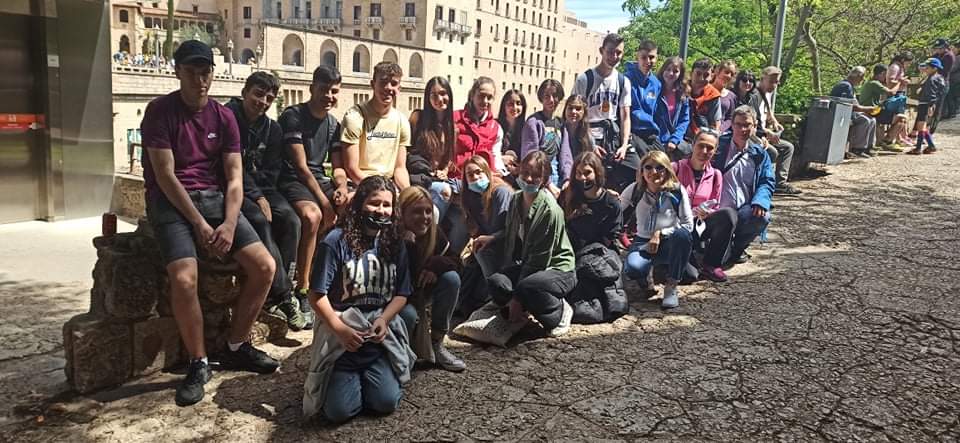
Friendships starting to blossom at the Monastery


Loving beautiful Sunshine!


The Greek nature goddess Chryssa made me a crown!


So much fun on the streets of Barcelona!


Tuesday, 25 April 2023

The Parc de la Pegaso: A factory site becomes a park

The Parc de la Pegaso: A factory site becomes a park

The name of the park in Sant Andreu, a district of Barcelona, refers to the fact that it was created on the site of a former Pegaso truck factory. Some remains of this former ENASA factory (Empresa Nacional des Autocamiones, Sociedad Anónima) still exist. At the edge of the park, the entrance gate and an office building still stand, which is now used as a centre for the local population. In 1986, the industrial wasteland was redesigned as a park by the architects Enric Batlle and Joan Roig.

The park is clearly divided into different areas. Behind the entrance gate there is a green area with winding paths, a viewing hill and a large pond that runs through the park as a canal. It is crossed by several bridges and forms a boundary to the central part of the park. In the middle part of the park is a large children's playground. Its most striking piece of playground equipment is a large slide tower in the shape of an octopus, with the octopus arms formed by the slides.

The third part of the park is more characterised by straight lines and open spaces delimited by hedges. These are available for the use of the residents of the neighbourhood and are used in place of missing gardens for family celebrations such as birthday parties. 


 At the opposite end are more buildings, including material storage for the gardeners and a kindergarten.

 The park is directly adjacent to the Spanish partner school. The insect hotels produced as part of the GREEN Erasmus project were installed there in spring 2022. These were handed over to the park management during an international project meeting of the partner schools.

Friday, 21 April 2023

Invasive species in the salt marshes of Playa de Matorral on Fuerteventura

The salt marshes in the tourist resort of Jandia in the south of the island of Fuerteventura are the only wetland of international importance on the Canary Islands. Strictly protected from human use, they are nevertheless in danger - but from invasive species. Such species originate from other parts of the world and are called neophytes (in the case of plants) or neozoa (in the case of animals). Since they can spread in the new habitat without their traditional enemies and competitors, they sometimes have a considerable impact on local ecosystems.

For Playa de Matorral, two species will be presented in more detail below.

A North American plant (of the plant family Faboideae) was probably introduced from Mexico for horticultural purposes on Gran Canaria and Fuerteventura. The species Desmanthus permanbucanus (Pigeon bundleflower) is considered to be a proliferating weed. The Faboideae plants are able to accumulate nitrogen as nitrate in the soil through nodule bacteria in the roots. In agriculture, they are therefore planted as a green fertiliser. In natural habitats, however, this causes a strong change in soil chemistry and is a threat to plants adapted to nutrient-poor soils. This has an effect, for example, in the barrancos, the erosion gullies in volcanic deposits on the island. For more information, see Verloove, F. & Borges, L. M., 2018: On the identity and status of Desmanthus (Leguminosae, Mimosoid clade) in Macaronesia, Collectanea Botanica 37 (https/doi.org/10.3989/collectbot2018.v37.007).

Desmanthus permanbucanus produces a large quantity of small seeds that accumulate in the soil as a seed reservoir and germinate when conditions are favourable. With this dispersal strategy it is difficult to control, as seeds are always left behind that can germinate later. The plant is controlled by pulling out seedlings before they can form seeds themselves or by using plastic sheeting in areas containing seeds.

Either opaque plastic is used to keep the moisture in the soil under the sheeting. The plants that germinate then perish due to the lack of light. With transparent plastic film, germination is accelerated. This makes it easy to observe the growth and the seedlings are then removed.


The ubiquitous North African bristled squirrels (Atlantoxerus getulus) are very popular among tourists. Although there are signs in many places urging people not to feed the animals, many people do not comply. Sometimes they even feed right next to prohibition signs. The Atlas squirrels were brought to the island of Fuerteventura as pets in 1965 and were able to spread almost everywhere due to the lack of natural enemies. Only in hotel complexes with cats no squirrels are found.

They are considered pests for the island's agriculture and a threat to native plants and animals. They compete for food with the native Eastern Canary Island lizard (Gallotia atlantica) or cause changes in the composition of plant communities. For example, they support the spread of prickly pears, which are also not native to the Canary Islands. Their juicy fruits are readily eaten by the squirrels on the very dry island. The aim is to prevent the squirrels from spreading to other islands (e.g. through ferry traffic). First settlement attempts on Gran Canaria or Lanzarote were probably successfully stopped.

Nature conservation in a holiday area – the Playa de Matorral on Fuerteventura

Since the 1960s, Fuerteventura, the second largest of the Canary Islands, has developed into an important tourist destination. Especially the south of the island around the former fishing village of Morro Jable on the Jandia peninsula is a hotspot of tourism on the island. Apart from a narrow coastal strip around Morro Jable, almost the entire peninsula has been protected as the Jandía Natural Park (Parque Natural de Jandía) since 1987. Since the development of tourism began in the mid-1960s with the Casa Atlántica hotel in Jandia Playa on the south coast, nature conservation and tourism have had to be reconciled. This applies in particular to the coastal salt marshes between the hotel zone and the actual sandy beach. The beach itself counts as a special zone with restricted use, which, however, means practically no restrictions for tourists. There are plenty of beach bars, deck chairs and surfing facilities on the wide sandy beach. 

Between the beach and the Jandia coastal motorway (and the hotel behind) lies the Matorral - a 115.6-hectare salt marsh. It is the only wetland in the Canaries to be included in the list of wetlands of international importance (RAMSAR Convention). Such coastal salt marshes are rare in the Canary Islands. The Matorral is also home to some endemic invertebrates and reptiles. Endemic species are those that only exist in a certain geographical area, for example only on a certain island or group of islands.

The low vegetation is characterised by salt-loving plants (halophytes) that withstand the high salinity of the soil through occasional flooding. These occur mainly during spring and autumn as spring tides around the equinoxes. Typical of the area are seabirds and waders for which the wetland is an important stopover in bird migration. A detailed description of the plant and animal species living there can be found in Spanish here: https://rsis.ramsar.org/RISapp/files/RISrep/ES1262RIS.pdf.

Access is strictly prohibited and the area is secured by a wooden fence. No human use occurs on the site. A wooden boardwalk leads from the main road across the salt marshes to the strand and ends at the lighthouse, which is visible from afar and counts as the landmark of Jandia. Signs not only point out the ban to enter the marsh, but also explain the importance of the Matorral as a wetland. For tourists, this may mean small diversions to the beach, as there are only two crossings on the almost three kilometres of extension along the shore. Nevertheless, nature conservation and tourism seem to harmonise well at this point.


Tuesday, 4 October 2022

Our trip to Collserola

 As we prepared our visit to Germany, the Spanish team made a trip to Collserola, a natural park in the city of Barcelona to collect samples for our herbarium. Here we present you with a video of this trip.


Monday, 9 May 2022

Barcelona meeting report

Students all around Europe came to Barcelona to live new experiences and learn new things from each of the countries. It has been a very busy week and this is what we’ve done so far.


April 30th

The arrival was on Saturday and all the students were very excited about meeting everyone from the different countries. It was a very tiring day, but everyone always kept a smile on their faces. The German and Portuguese students visited not only Montjuic, but also plaça Espanya. As the Greek and Irish arrived late at night, they weren’t able to visit much.


Sunday 1 May
On Sunday we went to Montserrat a very special mountain close to Barcelona. We did a walk around the area and also we visited the monastery.


Monday 2 May
Monday was our first day at the school. First the headteacher delivered a small wellcome speech. After that speech we made a tour around the school and also we had a wellcome breakfast. Finally we visited the Sagrada Familia, one of the most famous monuments in Barcelona. When we came back to the school we had lunch and then we made a workshop where we printed a white T shirt with the Park Güell Drac a symbol of the city.


Tuesday 3 May

On Tuesday we had a working day in the school. We made multinational groups and worked in several activities. Some groups finished the insect hotels, another group made a presentation about the survey we have made about the use of parks and garden. Finally some groups made nice murals about historic parks and gardens of our countries. At midday we delivered an insect hotel to the maintenance staff of a park close to the school. After lunch we visited Barcelona center.


Wednesday 4 May

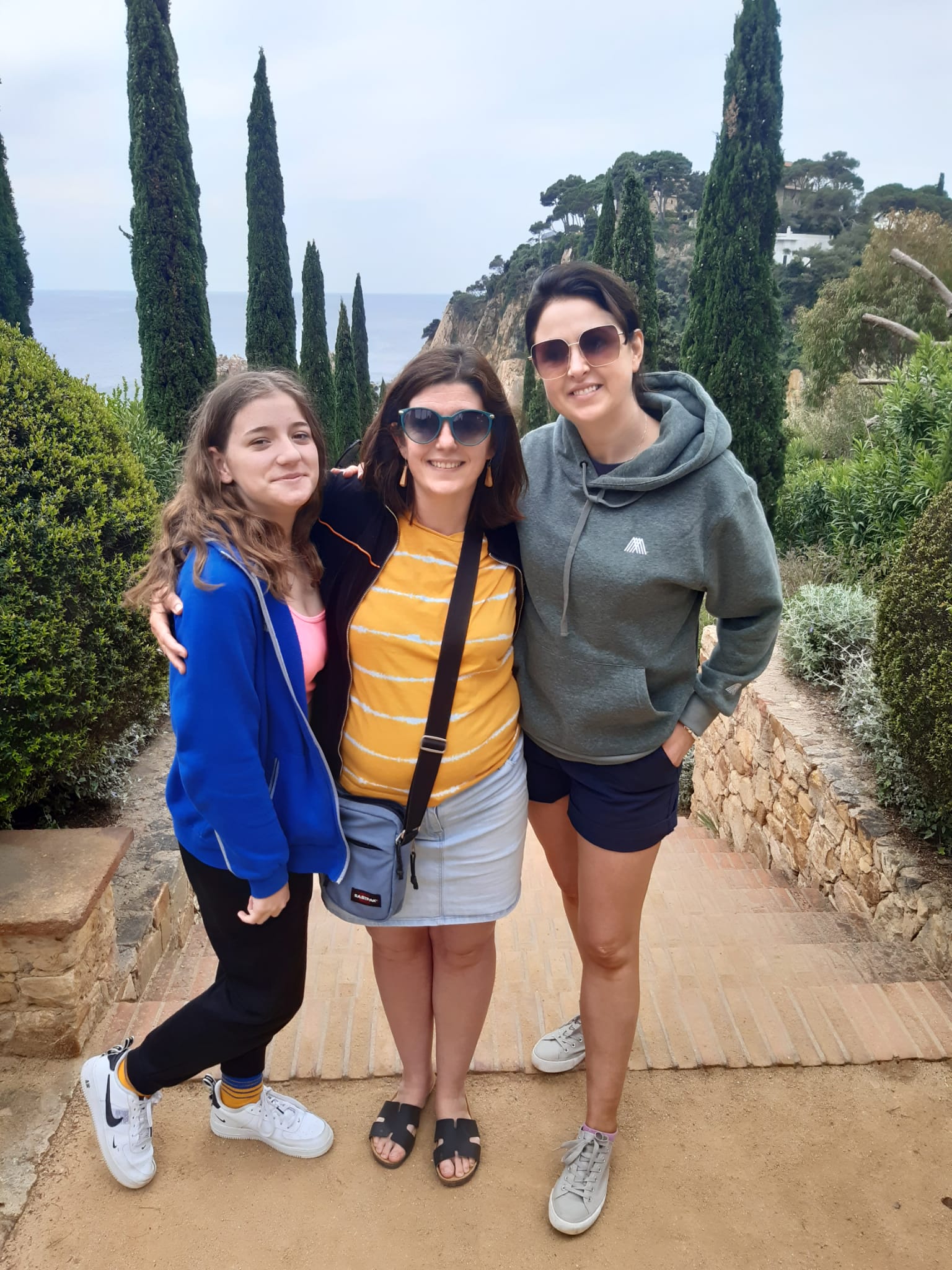
We have been working in parks and gardens for the first part of our project, and for this reason on Wednesday we made a day trip to visit Marimurtra a botanical garden in Blanes, a town 70 km away from Barcelona. There, we had a guided tour where we were explained the history of this garden and its highlights. Afterwards we had lunch in Lloret de Mar, another town close to Blanes and some of us took a bath in the Mediterranean sea!


Thursday 5 May

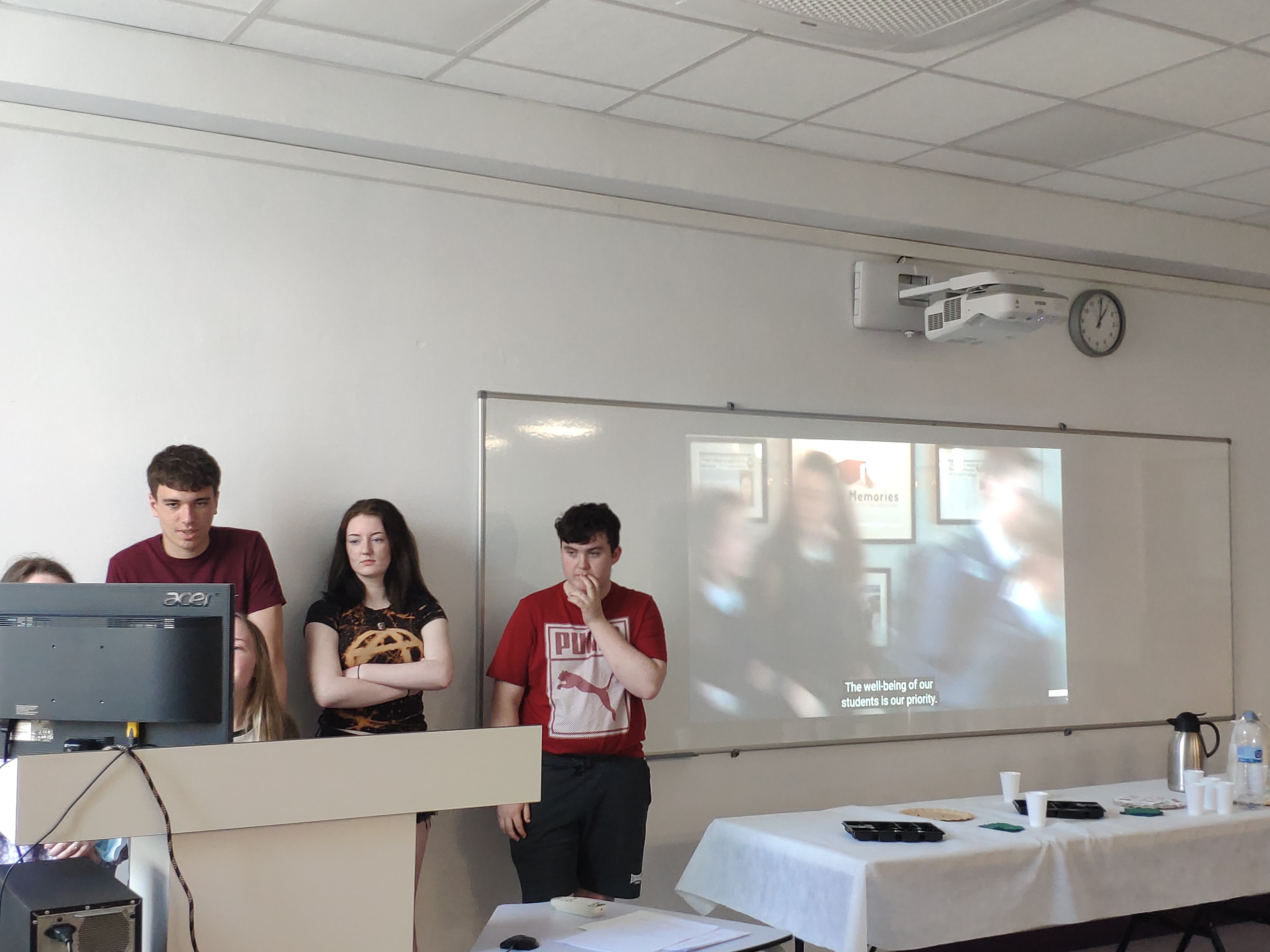
Thursday was our last completed day in Barcelona. In the morning we worked in the school. Every team showed presentations that they have prepared before coming to Barcelona and we learnt different facts about the schools and countries that are involved in the project. We also delivered another insect hotel to a orchad near the school managed by the neighbourhood association. After lunch we had a guided tour through Park Güell, the famous park designed by Gaudí. As it was our last day, at night we had a nice farewell dinner in a pizzeria. In September we will see each other in Germany!